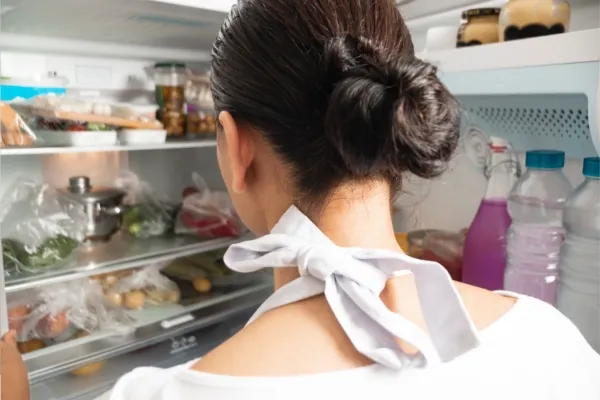
How to Organize Your Refrigerator
How many times have you opened the refrigerator and struggled to find what you were looking for? Or worse, discovered something in the back of the fridge that needs to be thrown out?
If that sounds familiar, it may be time to take a second look at how your refrigerator is organized. A well-thought-out fridge “system” can make cooking and shopping easier, reduce food waste and help keep the food you and your family enjoy fresher. Consider these tips for making the best use of your refrigerator.
Learn the temperature zones. While it may seem like the refrigerator is one uniform temperature (cold, we hope!), different areas are actually warmer or colder. For food safety, keep your refrigerator at 40°F or below. The coldest areas are generally toward the back and bottom. Store raw meat, poultry and seafood on the lowest shelf, preferably in a sealed container, to prevent juices from dripping onto other foods. Keep eggs, dairy and leftovers on interior shelves where the temperature is more consistent. The door is the warmest part of the refrigerator, so reserve it for condiments, sauces and other foods that aren’t as sensitive to temperature changes.
Make your crisper drawers work for you. Most vegetables stay fresher in a high-humidity drawer, while most fruits do better in lower humidity. Keeping them separated can also help because some fruits release ethylene gas, which can cause nearby produce to ripen—and spoil—more quickly.
Keep space in mind. Your refrigerator needs room for cold air to circulate. Avoid packing shelves so tightly that air can’t move around the food. A little breathing room can help maintain a more consistent temperature throughout the refrigerator.
Label away! If more than one person uses the kitchen, don’t be afraid to label shelves and drawers so everyone knows where things belong. You can also label containers with the date they were opened or prepared. This makes it easier to use food while it’s still fresh and quickly identify what needs to go.
Avoid buying double. Before heading to the grocery store, take a quick photo of the inside of your refrigerator. You’ll be more likely to remember what you already have—and less likely to come home with another jar of mustard you didn’t need!
Design It Right From the Start
Good refrigerator organization begins with having the right one to meet your needs. If you’re remodeling your kitchen, think about what isn’t working with your current refrigerator to get the size capacity and configuration (freezer on the side or bottom) so you only need one in the home.
A thoughtful kitchen design will make it work better for the people who use it every day. The designer will put it in an optimal location so it is easy to load groceries and to reach contents without creating a traffic jam. Communicate if you entertain frequently and if you want guests to access drinks and other refrigerator items without getting in the cook’s way.
A little organization can go a long way. When everything has a place, you’ll spend less time searching, waste less food and get more enjoyment out of one of the hardest-working appliances in your kitchen.
In everything set them an example by doing what is good. Titus 2:7